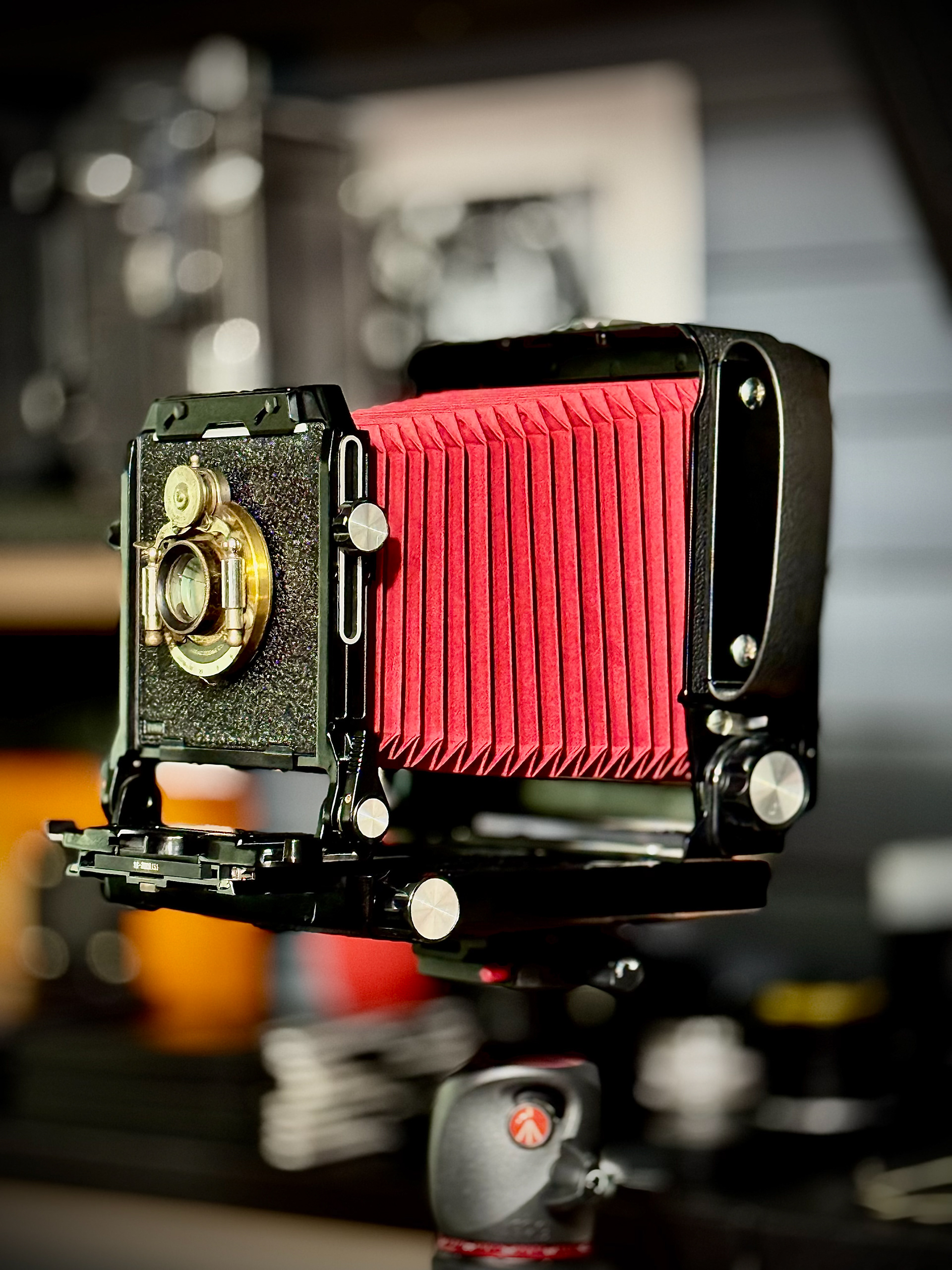
My exhibit, History in Focus, set out to document Noblesville’s older homes and commercial buildings using my great-grandfather’s 1902 Bausch & Lomb lens on a 4x5 field camera. Each image was made on Ilford Direct Positive Paper, creating a single, one-of-a-kind print. I wanted the project to show the town’s quiet character through a slower and more deliberate way of working.
It did not go exactly as planned. I learned that the paper demanded full, direct light. Anything less left the image dull or unusable. What began as a search for subjects I found interesting became a search for subjects that were both interesting and fully exposed. My original vision was not fully realized, but the process taught me a lot about the lens, the limits of the material, and the patience it required.
The Birdie Gallery darkroom became an essential part of the project. Every print was developed there, and that space gave me the consistency and control I needed to understand how the paper reacted. It also became a quiet place to slow down, review mistakes, and start over.
Even with its shortcomings, the project felt connected to something larger. Using my great-grandfather’s lens more than a century later tied his craft to mine. I also enjoyed the hunt for vintage frames that matched the age and tone of each print. In the end, History in Focus taught me more about process than outcome, and that was enough.
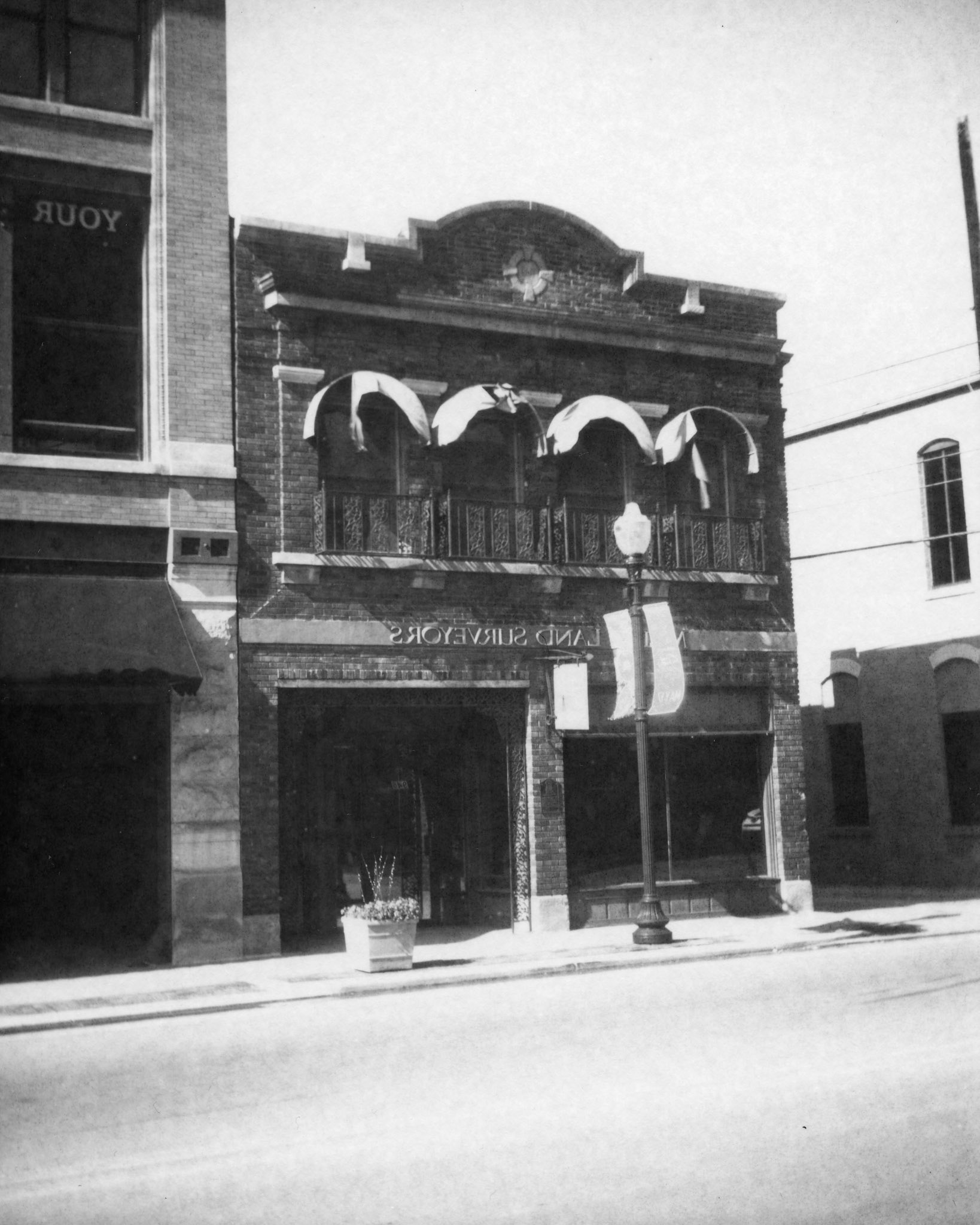
Miller Land Surveyors Building
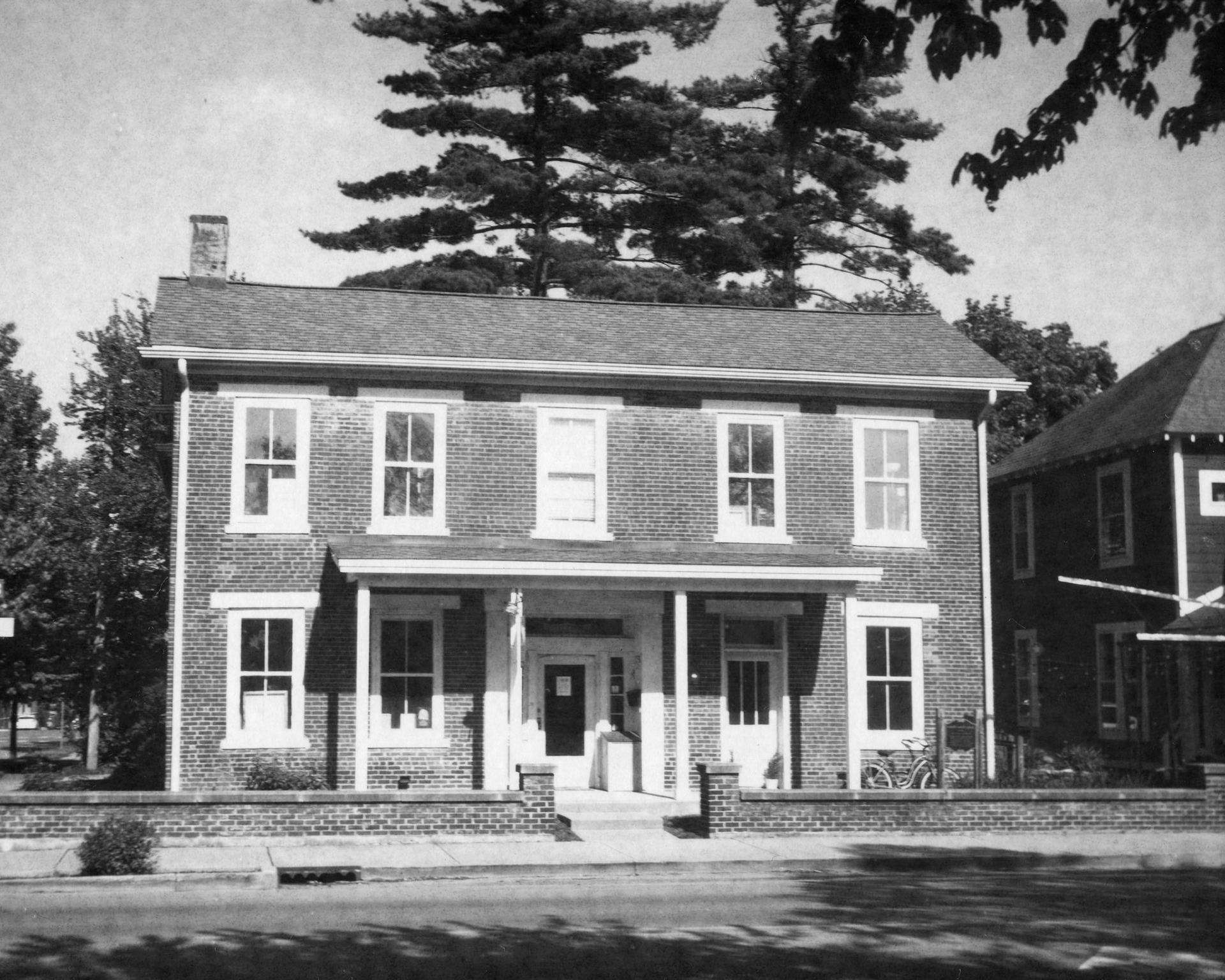
Noblesville Creates
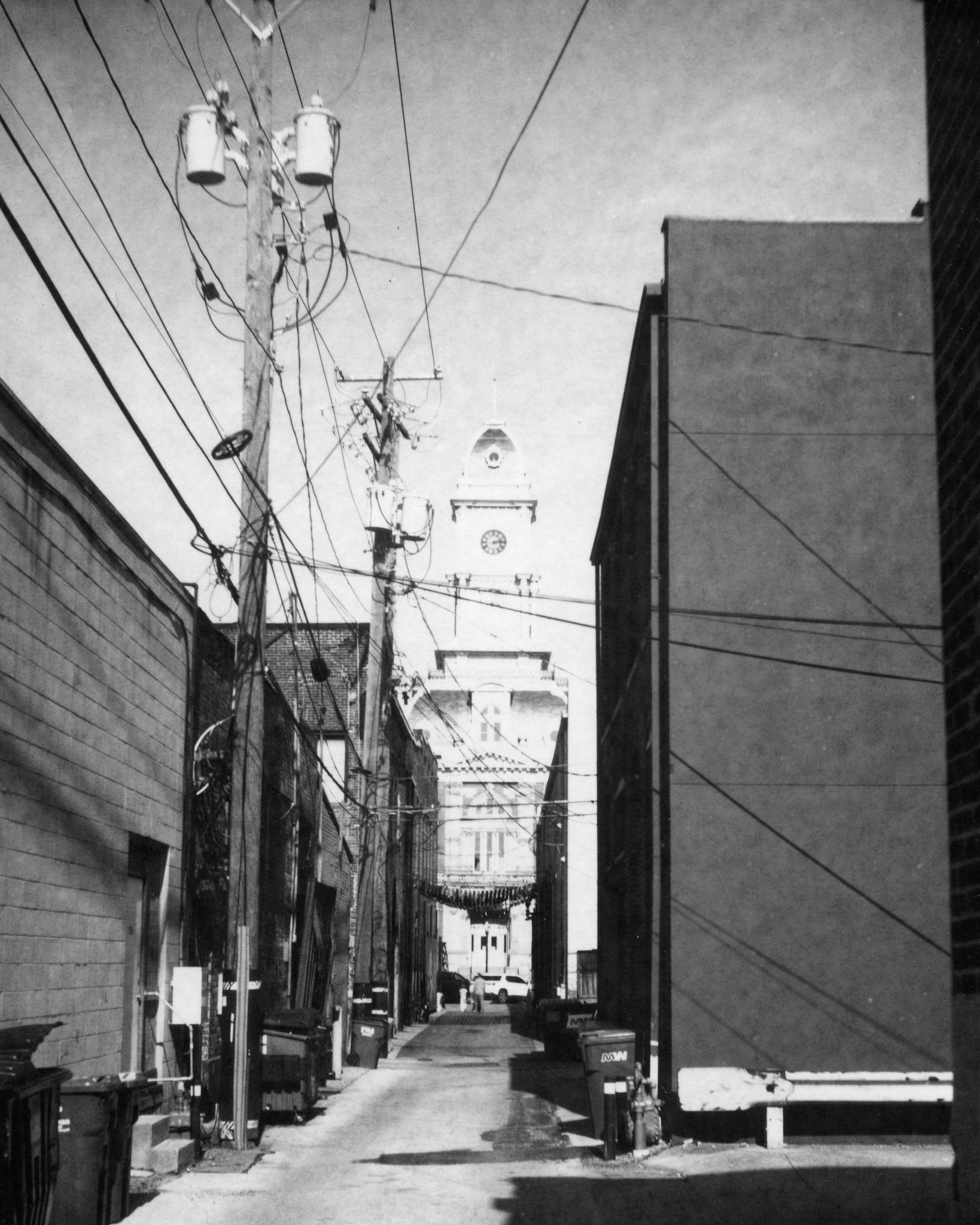
East Alley
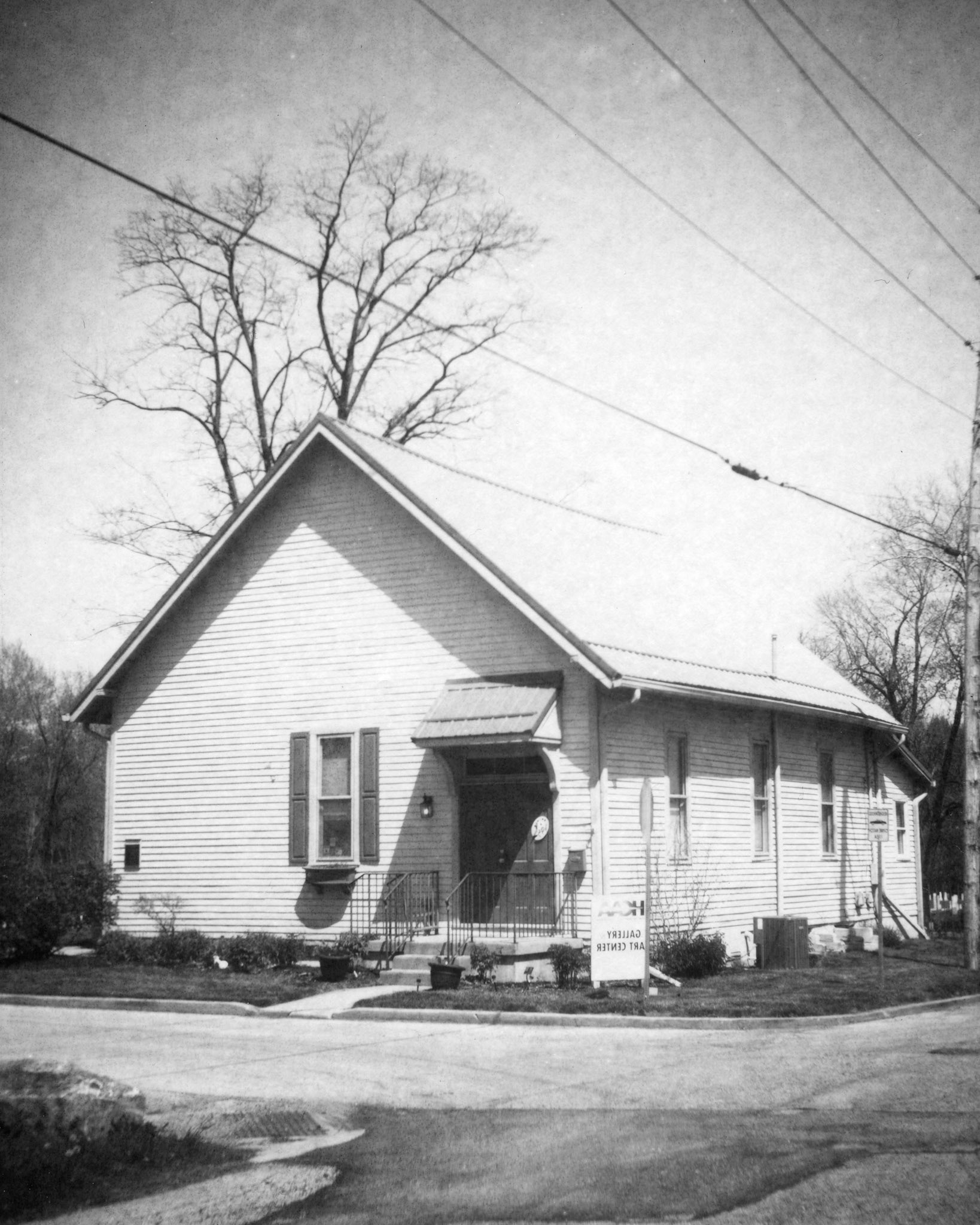
HCAA's Birdie Gallery
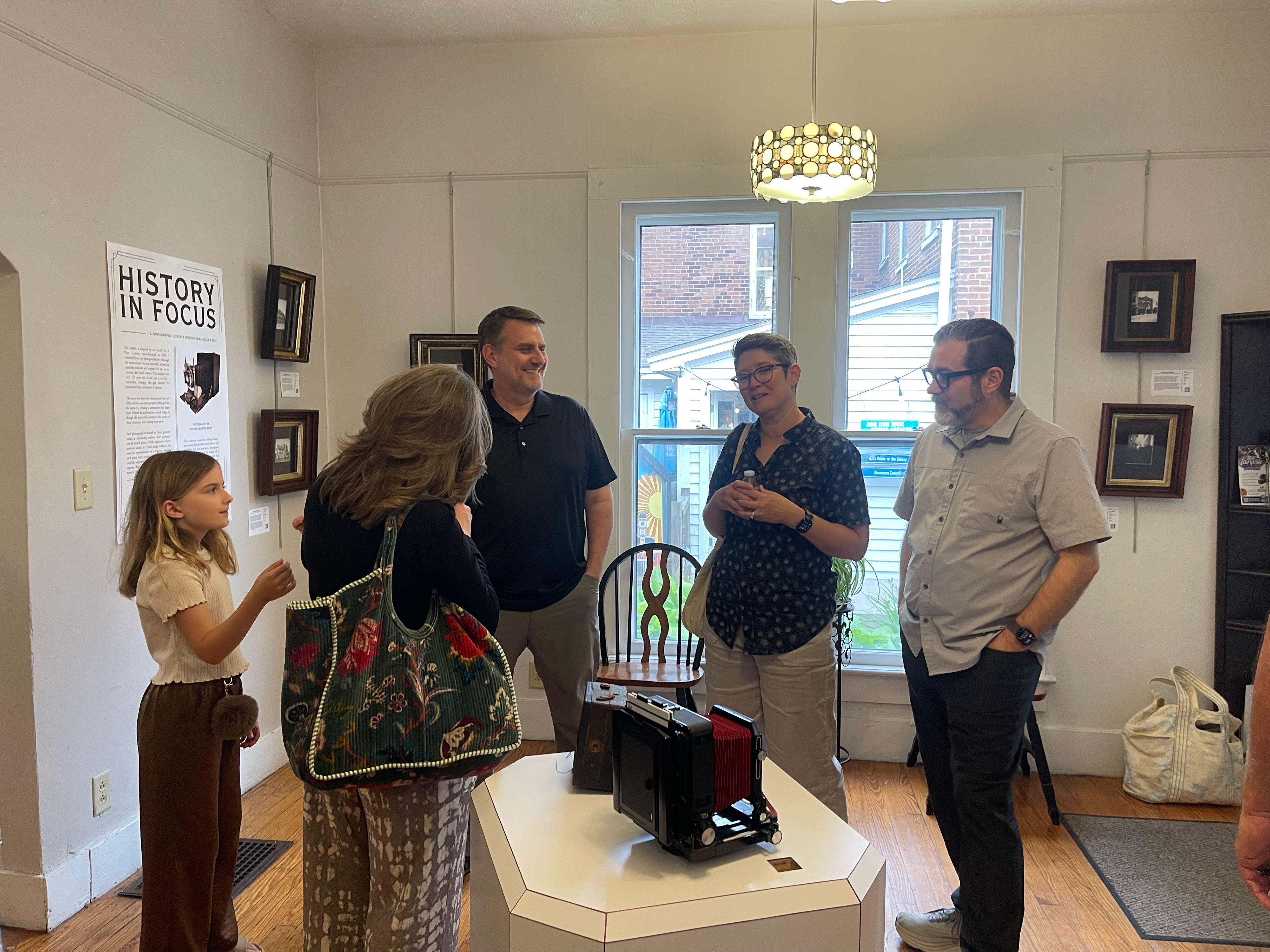
Opening Reception
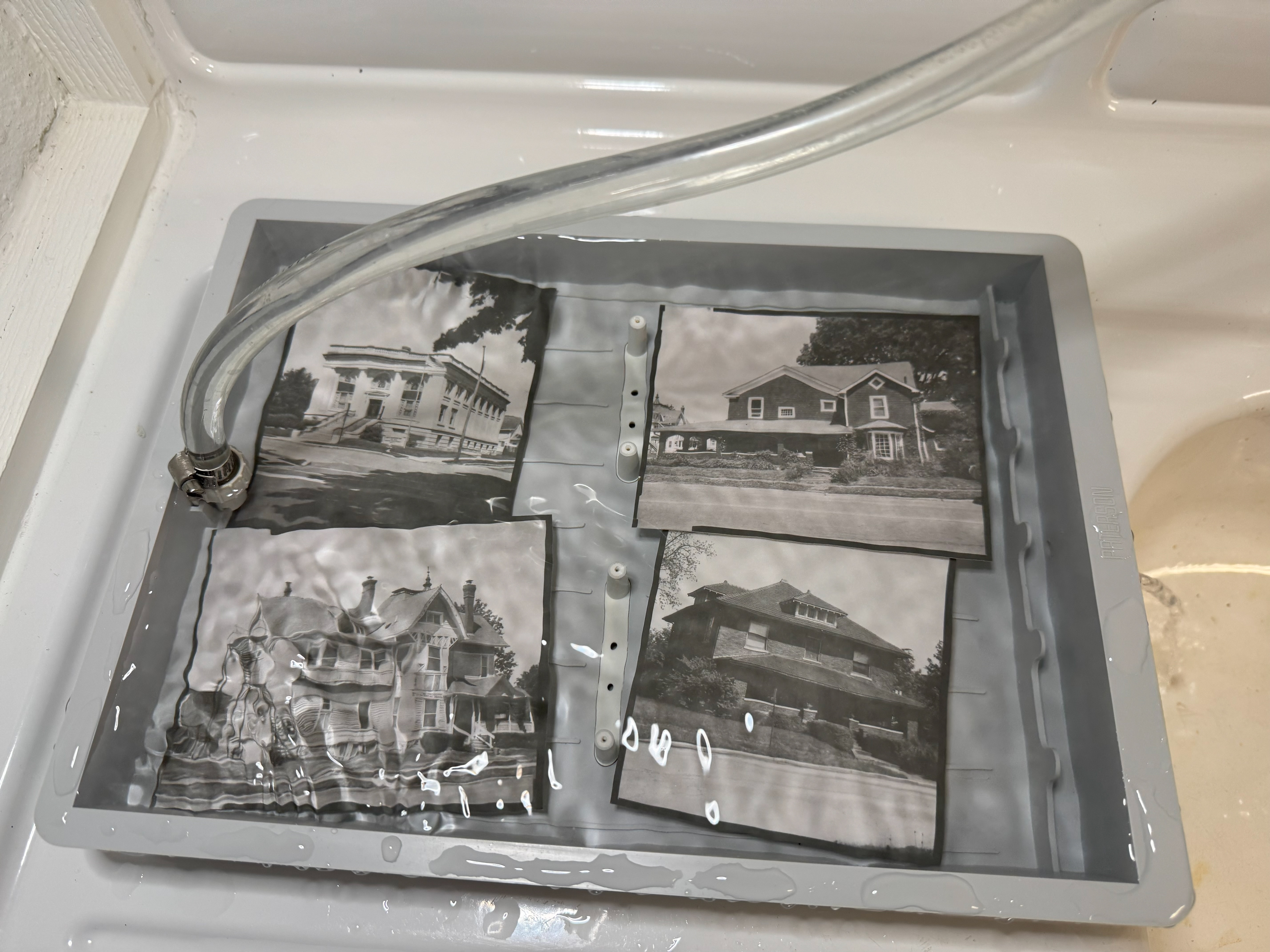
Rinse stage